
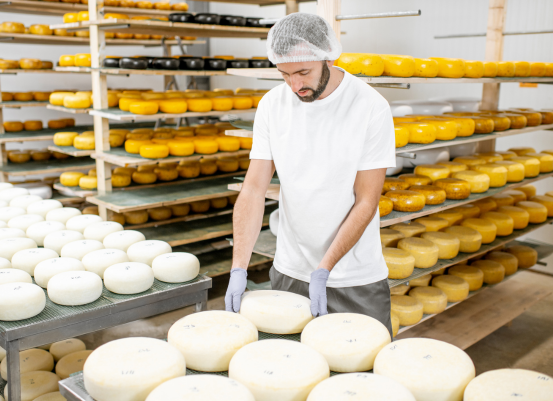
Running a cheese-making demonstration offers several significant advantages for both Cheesemongers and Cheesemakers.
Whether you’re a passionate Cheesemonger looking to educate and engage your customers or a dedicated Cheesemaker eager to showcase your craft, this campaign will leave a lasting impression. Delve into the world of curds and whey as we explore the reasons, strategies, and invaluable benefits of running a cheese-making demonstration. From fostering deeper connections with customers to elevating your brand’s story, join us on a journey that celebrates craftsmanship, education, and the sheer delight of cheese.
How to run a Cheesemaking Demonstration
Running a cheese-making demonstration requires careful planning, preparation, and engaging presentation skills. Here’s a step-by-step guide:
Pre-Event Preparation:
1. Select the Cheese:
- Choose a cheese variety suitable for demonstration—consider the complexity of the process and time constraints.
2. Gather Supplies:
- Ensure you have all necessary ingredients, equipment (pots, thermometers, molds), and materials (cheesecloth, cultures) readily available.
3. Plan the Venue and Setup:
- Choose a well-lit, spacious area with proper facilities (like stovetops, sinks) if cooking is involved.
- Set up a demonstration station with clear visibility for attendees.
Execution of the Demonstration:
4. Introduction and Context:
- Begin with a brief introduction, explaining the cheese variety, its history, and the significance of the process you’re about to demonstrate.
5. Step-by-Step Demonstration:
- Break down the cheese-making process into clear, understandable steps.
- Explain each stage while demonstrating—emphasize critical points like temperature control, stirring techniques, or curd formation.
6. Engage the Audience:
- Encourage questions, interaction, and participation from attendees.
- Involve them in simpler tasks like stirring or adding ingredients under your guidance.
7. Highlight Unique Aspects:
- Showcase any unique techniques or qualities of the cheese-making process that set your demonstration apart.
Post-Demonstration:
8. Q&A and Discussion:
- Allocate time for a Q&A session, addressing any queries and sharing additional insights.
- Facilitate discussions about the cheese, its flavour profile, ideal pairings, or storage tips.
9. Sampling and Tasting:
- Offer attendees samples of the finished or partially prepared cheese to taste and experience its flavours firsthand.
10. Follow-Up Information:
- Provide attendees with supplementary materials—a recipe card, a guide on where to purchase the cheese, or additional educational resources.
Key Considerations:
- Timing: Be mindful of time constraints—plan the demonstration to fit within a reasonable timeframe to maintain attendees’ interest.
- Clarity and Simplicity: Explain the steps and techniques in simple terms, avoiding jargon that might confuse the audience.
- Safety and Hygiene: Follow proper food safety protocols and maintain cleanliness throughout the demonstration.
- Flexibility: Be prepared for unforeseen challenges or questions and adapt to engage the audience effectively.
By focusing on clear communication, engaging demonstrations, and fostering audience interaction, you can successfully run a cheese-making demonstration that educates, entertains, and leaves attendees with a deeper appreciation for the art of cheese-making.